A Dhanteras counter-display brief for real stock
Two practical counter-display concepts with quantity checks and measurements still needed. Paste this prompt into ChatGPT, Gemini, Claude or Grok, change the parts in brackets to suit you, and generate.
- Written for
- ChatGPT, Gemini, Claude, Grok
- Occasion
- Dhanteras · 6 Nov
- Status
- Tested 9 Oct 2026 in Grok, 9 Oct 2026 (one run; model id not exposed)
- Test settings
- The page's exact default prompt was run once in Grok on 9 Oct 2026. The default details already written on the page were the input. They are illustrative, not a record of a real event. ChatGPT and Gemini were not used. The first result was kept.
- Variability
- A different set of details, or another run, will change the wording. This is the first result for the defaults on this page.
Prompt
Create two shop-counter arrangements using only the stocked objects and supplied space. Specify focal item, height grouping, label positions and customer viewing route. Keep true product proportions and labels; optional props must be separately named. Give a text sketch labelled approximate and explain how to prevent the display from obstructing the counter. Do not create an image or claim the display is already built.

My details:
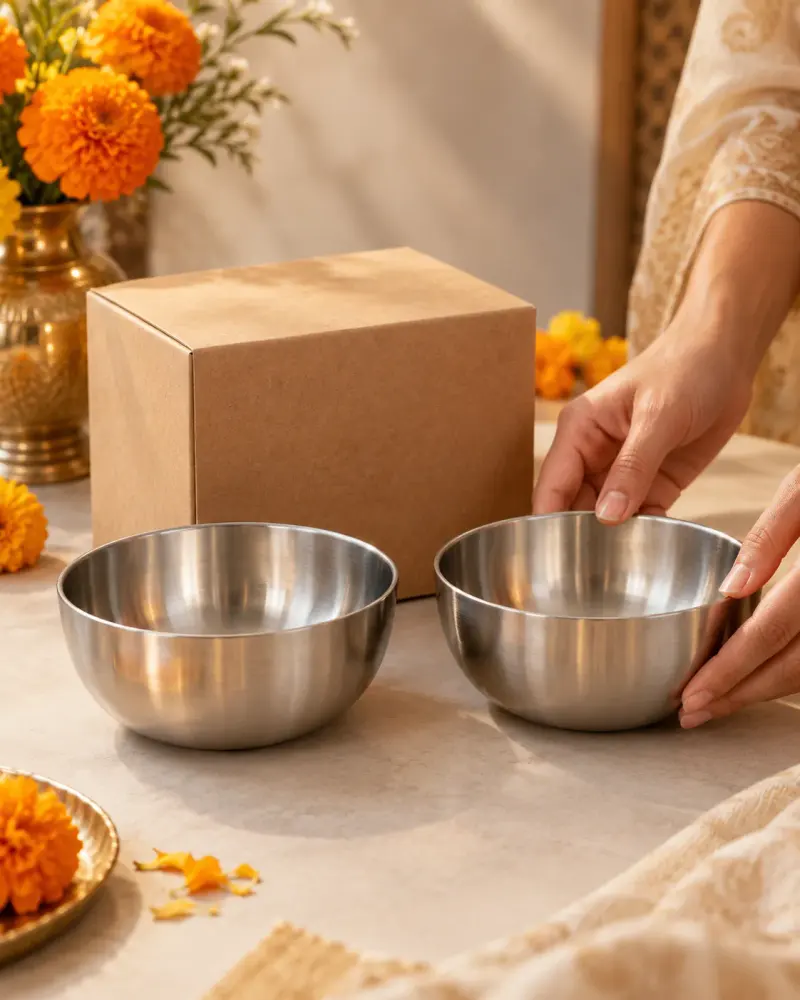
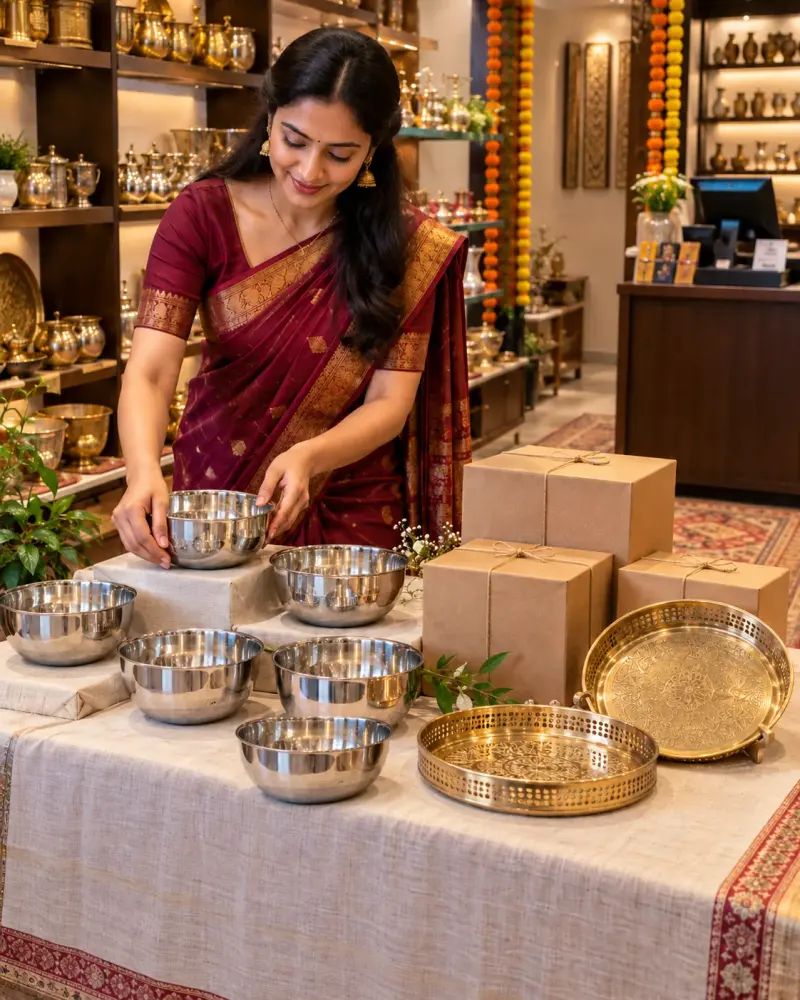
Counter: 120cm by 50cm. Stock: six steel bowls, two brass decorative trays, three kraft gift boxes. Props: plain fabric. Keep payment area clear.

Use only supplied facts; fictional default details are examples, not a real event. Ask for essential missing input or mark unknowns rather than inventing people, prices, dates, permissions or commitments. Regional and family practices can differ; do not present one practice as a universal rule.

Output each arrangement as: zones | objects and quantities | approximate text sketch | visibility/access tradeoff. Treat countertop dimensions as supplied limits, not proof the objects fit. If item footprints, support heights or the payment-area size are unknown, request measurements before providing an exact placement plan. Never add stock, claim a scaled layout, stack unstable objects or change a supplied label; optional support/props must be confirmed before use. Check all supplied quantities and keep the payment zone outside the proposed display.
Customise
Paste the real details. Leave out anything you do not want repeated.
Fields start with illustrative values; replace them with your own facts. The prompt updates as you type. Copy prompt copies your version.
Example output
Actual tested output. The notes used for this result are an example, not a real event. This box is not copied. Replace the notes above with your own before you paste the prompt.
The display is not built. This is a planning brief only. No image is provided.

Supplied limits: counter 120cm by 50cm. Those measures are limits, not proof that the objects fit. Stock: six steel bowls, two brass decorative trays, three kraft gift boxes. Optional prop named separately: plain fabric. Confirm the fabric before use. Payment-area size: unknown. Keep the payment area outside the display. Item footprints and heights: unknown. Request those measurements before any exact placement. Do not stack objects. No scaled layout is claimed. Labels already on the goods stay as they are. No stock is added.

Arrangement 1

Zones | Customer-view front strip and a staff-side back strip on the 120cm by 50cm top. Payment zone stays off this display. The payment zone's size is still unknown, so the usable display area may be smaller than 120cm by 50cm.
Objects and quantities | All stock, only if footprints fit on one level: six steel bowls, two brass decorative trays, three kraft gift boxes. Plain fabric is optional and not yet confirmed. Focal item proposed: one brass decorative tray, centred, not raised on other goods.
Approximate text sketch | [front / customers] boxes grouped at one end, bowls in one single-layer row, two trays flat near the centre, fabric under them only if confirmed [back / staff]. Payment zone is outside this sketch. Not to scale.
Visibility/access tradeoff | Using all eleven objects may crowd the counter and hide labels or block payment. If a footprint test overlaps the payment area or the edge, move boxes off the counter first. Where the off-counter stock sits was not supplied.

Arrangement 2

Zones | A short central group only. The rest of the 120cm by 50cm top, including the whole payment side, stays clear. Exact clear width is unknown until the payment area is measured.
Objects and quantities | On-counter proposal: one brass decorative tray as the focal item, two steel bowls, one kraft gift box. Held off the counter: four steel bowls, one brass decorative tray, two kraft gift boxes. Plain fabric optional and unconfirmed. Off-counter location: unknown.
Approximate text sketch | [clear counter] [tray flat, two bowls beside it on the table, one box next to the bowls, no stacking] [clear payment side]. Not to scale.
Visibility/access tradeoff | Easier payment access and a clearer focal tray. Less of the range is visible. Customers may not see the steel bowls and boxes that are off the counter.

Ask before an exact plan: footprint and height of one bowl, one tray, and one box; payment-area width and depth; whether plain fabric is approved.
How to use it
- Open ChatGPT, Gemini, Grok or Claude.
- Paste the prompt and replace the [BRACKETS] with your details.
- Review names, facts and the requested format; follow up with corrections or missing details.
How to use this prompt
- Fill Customise with your real details. Do not let the tool guess a missing fact. Write the missing information clearly if you need to.
- Press Copy prompt and paste it into the AI app named above. This page copies the prompt. The answer is created in the external app.
- Check names, facts, numbers, language and the format you asked for. If something is wrong or incomplete, ask for a correction.
Good to know
- The sketches are approximate. Confirm object sizes, stable supports and the payment space before building; this is not a scaled or certified layout. Run once in Grok on 9 Oct 2026 using the illustrative defaults on this page. Check the draft against your own facts before you use it.
- Check facts before you rely on the answer.